
The RBI has increased the repo rate from 5.25% to 5.5% and raised its growth forecast for FY2026-27 from 6.7% to 7.1%. This means borrowing may become costlier, FD rates may improve, and the economy is expected to remain resilient despite inflation risks.
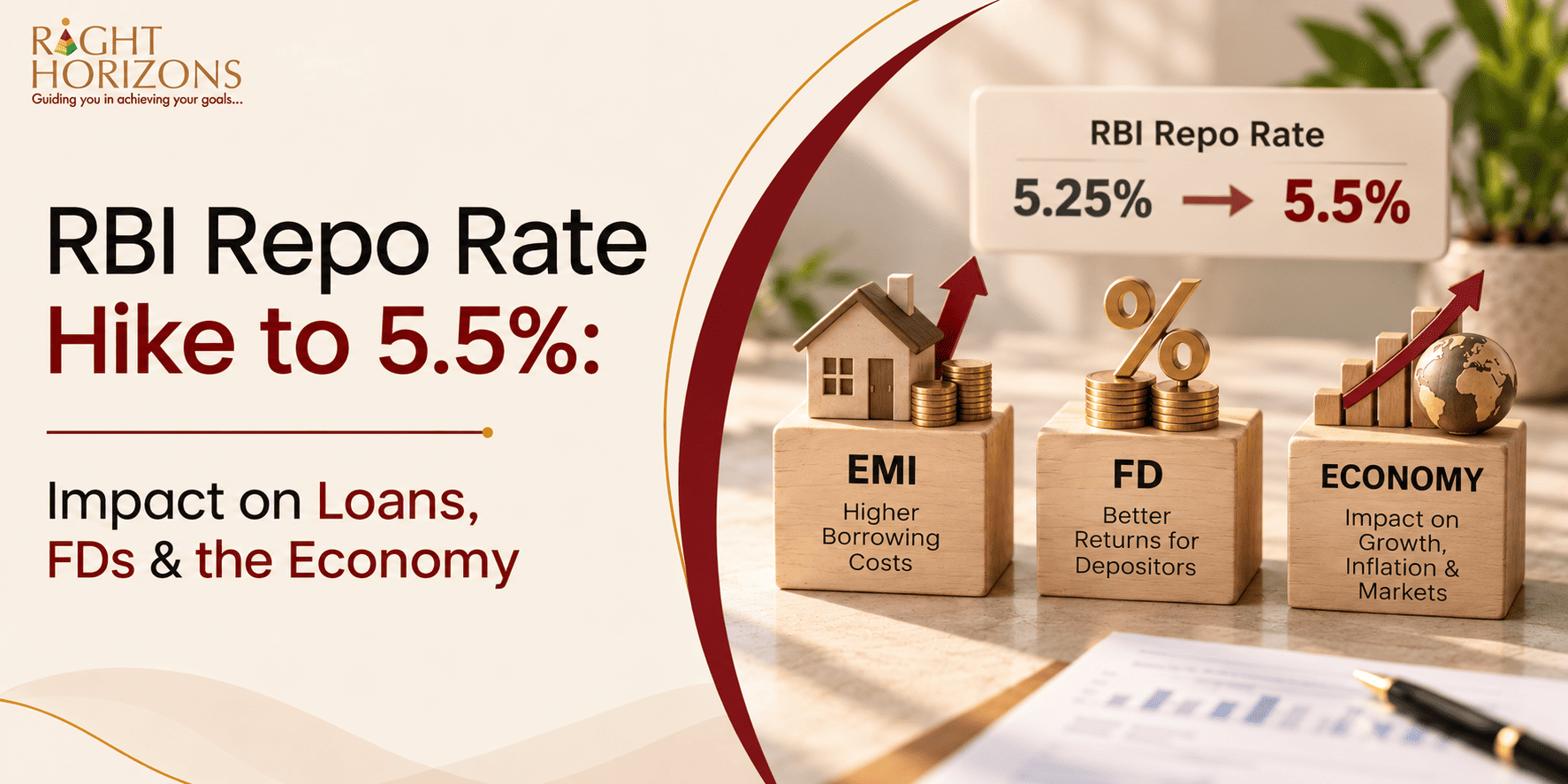
When we take a loan from a bank, the bank charges us an interest rate that we repay over time. Similarly, when banks borrow money from the RBI, the interest rate charged on that borrowing is called the repo rate.
Borrowing from the RBI is only one of the ways banks raise money. Banks also raise funds through customer deposits and other sources. Each bank then decides its lending and deposit rates based on its cost of funds, expenses, margins and business strategy.
For example, if a bank borrows ₹1,00,000 at 5.25% and lends it at 8.25%, the difference helps the bank cover its costs and earn a margin. But this is only one part of the bank’s profit. Banks also have to cover salaries, branch operating costs, interest paid on deposits and other expenses.
Now that the repo rate has increased from 5.25% to 5.5%, banks’ borrowing costs may rise. If banks continue lending at the same rates, their margins could reduce. To protect profitability, banks may eventually increase lending rates.
For loans with floating interest rates, an increase in interest rates can mean a higher monthly EMI, a longer repayment period, or both. Fixed-rate loans remain unchanged for the fixed-rate period.
Higher interest rates also make new loans costlier. People may postpone purchases, and businesses may delay expansion plans. This can directly influence economic activity and slow down growth.
Short-term bond yields may rise more than long-term yields because they respond more directly to higher policy rates. If inflation remains high, investors may also demand higher yields on long-term bonds to compensate for inflation and uncertainty.
Higher borrowing costs can reduce business profits and delay expansion, which may put pressure on stock prices. When safer investments such as FDs and bonds offer better returns, some investors may prefer them over equities. This can reduce demand for stocks, keeping markets volatile in the short term.
The positive side is that higher interest rates can lead to better new FD rates, benefiting savers. Lower borrowing and spending can also help contain inflation.
The rate hike may also support the rupee by making Indian debt investments more attractive to foreign investors. However, it does not guarantee lower selling pressure in equities.
| Area | Likely Impact |
|---|---|
| Floating-rate loans | EMIs may rise, loan tenure may increase, or both may happen. |
| Fixed-rate loans | No immediate change during the fixed-rate period. |
| New borrowers | New loans may become costlier as banks pass on higher borrowing costs. |
| FD investors | New or renewed FD rates may improve. |
| Equity markets | Markets may remain volatile in the short term as borrowing costs rise. |
The RBI has increased the repo rate because of concerns around inflation. Inflation has remained high due to factors such as higher crude oil prices, a weaker rupee against the dollar, and lower-than-expected southwest monsoon rainfall along with El Nino conditions.
Costlier crude oil increases input costs and raises prices of crude-linked products. Poor rainfall can reduce crop output, which pushes food prices higher. A weaker rupee makes imports costlier, which also affects consumers.
Higher inflation means everyday prices rise, reducing people’s spending ability. This becomes an obstacle for economic growth.
A rate hike cannot directly increase rainfall or reduce global oil prices. However, it can reduce borrowing and spending, helping prevent the initial price rise from spreading across other goods and services. The aim is to stop inflation from becoming a longer-lasting problem.
The RBI has also increased its inflation forecast from 5% to 5.2% and shifted its stance to “calibrated tightening”. Simply put, the possibility of rate cuts is off the table in the near term. The next move could be another hike or a pause, depending on inflation and growth trends.
At the same time, strong domestic spending and investment have led the RBI to raise its growth forecast for FY2026-27 from 6.7% to 7.1%. This suggests that the economy is expected to remain resilient, even as high oil prices, weak rainfall and global uncertainty remain risks.
The repo rate hike means new borrowing may become costlier, while banks may offer better rates on new or renewed fixed deposits. Borrowers should check whether their bank changes their EMI or repayment period.
For savers, this may be a better environment for FD rates. For borrowers, especially those with floating-rate loans, it is important to review the loan structure and understand how quickly rate changes may affect repayments.
The broader challenge for the RBI is to control inflation while keeping growth steady.
 Talk to us
Investor Grievance
Talk to us
Investor Grievance


